Source Digital Display Tap Density Tester for Cement, Plastic, and Powder Testing
Compare 30 digital display tap density tester models from verified Chinese suppliers. Evaluate specifications like frequency, amplitude, and repeatability to find the right instrument for cement, plastic, and powder testing applications.
Key considerations
Products List




Comprehensive Sourcing Guide
Strategic Sourcing Guide for Digital Display Tap Density Testers
Understanding Core Technical Specifications and Operational Parameters
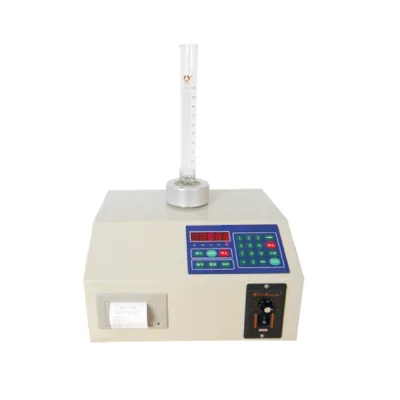
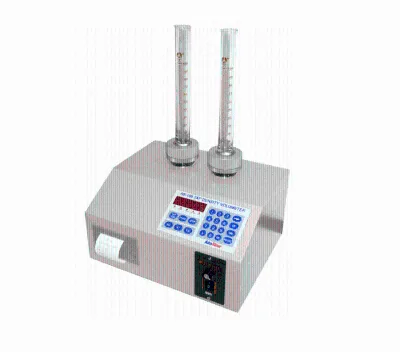
When sourcing a digital display tap density tester, buyers must first distinguish between the specific operational parameters that define the instrument's capability. The core function of this equipment is to measure the bulk density of powders and granular materials by simulating the tapping process that occurs during shipping and storage. The observed market data indicates that these devices typically operate with a single-channel configuration, ensuring focused and consistent measurement of the sample volume. A critical technical parameter to verify is the frequency of operation. Reliable units in this category often feature a continuous adjustable frequency range, typically capped at a maximum of 300 revolutions per minute (rpm). This adjustability is essential for testing materials with varying flow characteristics, as different powders require specific tapping rates to achieve accurate density readings.
The physical movement of the tester is governed by its amplitude settings. High-performance models allow for an integer variable amplitude ranging from 1mm to a maximum of 15mm. This range accommodates various international testing standards, where some protocols require a specific tap height, such as 3mm or 14mm, while others allow for custom configurations. The timing mechanism is equally vital; buyers should look for instruments capable of a counting range up to 999,999 taps and a timing range extending to 99,999 seconds. This ensures the machine can handle both short-duration quick checks and long-term stability tests without interruption. The sample loading volume is another defining specification, with standard units designed to accommodate volumes between 5ml and 250ml. This flexibility allows the tester to handle small laboratory samples as well as larger industrial batches.
The display interface is a primary differentiator in this product category. The "Digital LCD Display" feature mentioned in product listings implies a user-friendly interface for setting parameters and reading results. The accuracy grade is typically digital, providing precise readouts that minimize human error. Furthermore, the repeatability of the machine is a key performance metric, with observed specifications indicating a repeatability of less than or equal to 1%. This level of precision is necessary for generating reliable data on the Hausner ratio and compressibility, which are derived from the tap density measurements. The motor torque, observed at 0.86 N.m in specific models, supports the mechanical load required to lift and drop the sample cylinder consistently. Buyers must ensure that the power supply requirements, often listed as 220V 50Hz, match the electrical infrastructure of their facility to prevent operational disruptions.
Compliance, Standards, and Regulatory Verification
Navigating the compliance landscape for laboratory testing equipment requires a rigorous verification of adherence to international and national standards. The digital display tap density tester is not merely a mechanical device; it is a precision instrument used to validate material properties against established norms. In the context of the observed product data, specific standards such as GB/T5162-2006 and ISO3953:1993 are cited as the governing protocols for tap density measurement. These standards dictate the methodology for determining the bulk density of powders, ensuring that the results obtained are comparable across different laboratories and industries.
Buyers must verify that the supplier explicitly confirms compliance with these standards. While the product listings mention these standards, it is the responsibility of the procurement team to request the official certification or a declaration of conformity from the manufacturer. The absence of such documentation can lead to data being rejected in quality assurance audits or regulatory filings. Additionally, the physical dimensions of the unit, such as the standard package size of 44x40x41 cm or the overall dimensions of 400x280x230mm, must be considered in the context of laboratory space planning. These dimensions are not merely logistical details but are often derived from the internal mechanics required to meet the standard testing protocols.
The origin of the product also plays a role in compliance, particularly regarding the manufacturing environment. The observed data points to origins in Hunan, Fujian, and Guangdong, China. While these regions are known for their manufacturing capabilities, buyers should verify that the production facilities adhere to international quality management systems. The "OEM" and "ODM" customization options available in the market suggest that the manufacturing process is flexible, but this flexibility must not compromise the adherence to the core testing standards. Buyers should request evidence that the customization process maintains the integrity of the standard-compliant mechanisms, such as the tap height and frequency controls.
Cost Drivers and Pricing Structure Analysis
The pricing structure for digital display tap density testers is influenced by several distinct factors, ranging from the complexity of the digital display to the robustness of the mechanical components. The observed price range in the market spans from 200 to 3,500 USD. This wide variance indicates that the market is segmented into basic models and high-end, fully automated units. The lower end of the spectrum likely corresponds to units with basic digital displays and fixed parameters, while the higher end includes models with advanced features such as continuous frequency adjustment, custom amplitude settings, and enhanced software integration.
One of the primary cost drivers is the customization capability. Products that offer OEM, ODM, or OBM support often command a premium price. This is due to the additional engineering and tooling costs associated with branding and specific design modifications. The packaging details also contribute to the final cost; units shipped in wooden boxes or specialized carton boxes with "safe" packaging guarantees incur higher logistics and material costs compared to standard packaging. The warranty period, typically observed as one year, is another factor that influences pricing. A longer warranty or more comprehensive service coverage often reflects a higher initial investment but reduces long-term risk.
The minimum order quantity (MOQ) is another critical component of the cost structure. The observed data indicates an MOQ of 1 set, which is highly favorable for small laboratories and research institutions. This low barrier to entry allows buyers to purchase single units without the need for bulk inventory, reducing capital expenditure. However, buyers should be aware that while the MOQ is low, the unit price may be higher for single-item purchases compared to bulk orders. The supply ability, noted as 5,000 pieces per month, suggests that the market has sufficient capacity to meet demand without significant price spikes due to scarcity.
Typical Applications and Industry Use Cases
The versatility of the digital display tap density tester makes it a valuable asset across a diverse range of industries. The primary application is in the testing of powders and granular materials, where the measurement of tap density is critical for determining flowability and packing efficiency. This is particularly relevant in the pharmaceutical industry, where the density of active ingredients and excipients affects tablet compression and capsule filling processes. The ability to measure the Hausner ratio and compressibility provides essential data for formulating stable and effective drug products.
Beyond pharmaceuticals, the instrument is widely used in the chemical industry for quality control of pigments, resins, and other powdered chemicals. The testing of cement and construction materials is another significant application, as the density of these materials impacts their strength and durability. The observed usage categories also include plastic testing, wood testing, textile testing, and glass testing, indicating that the device can be adapted for various material types. This adaptability is facilitated by the adjustable sample loading volume and the customizable tap height, allowing the machine to handle different material densities and particle sizes.
In the context of vibration testing and impact testing, the digital display tap density tester serves as a specialized tool for evaluating the mechanical properties of materials under repeated stress. The motor torque and amplitude settings allow for precise simulation of real-world conditions, making the device useful for research and development in automotive and aerospace sectors. The ability to test materials such as plastics, woods, and textiles ensures that the equipment meets the diverse needs of modern manufacturing and quality assurance departments.
Supplier Evaluation and Vendor Selection Criteria
Selecting the right supplier for a digital display tap density tester requires a thorough evaluation of their technical capabilities, service offerings, and reputation. The first step is to verify the supplier's ability to provide the specific technical specifications required. Buyers should confirm that the supplier can deliver units with the observed parameters, such as a maximum frequency of 300 rpm, an amplitude range of 1mm to 15mm, and a repeatability of ≤1%. The availability of customization options, including OEM, ODM, and OBM support, is also a key indicator of a supplier's flexibility and technical depth.
The supply chain reliability is another critical factor. The observed supply ability of 5,000 pieces per month suggests that the market has a robust capacity, but buyers should still inquire about the supplier's current lead times and production schedules. The port of dispatch, listed as Shanghai, Shenzhen, or Guangzhou, provides insight into the logistics network and the potential for efficient shipping. Buyers should also evaluate the packaging details to ensure that the product will arrive in good condition, with specific attention to the "Good carton box" or "Wooden Boxes" mentioned in the product descriptions.
Customer support and after-sales service are equally important. The standard warranty of one year is a baseline expectation, but buyers should inquire about the availability of extended warranties, technical support, and spare parts. The ability to provide training and documentation for the operation and maintenance of the device is also a valuable service that can reduce downtime and ensure accurate usage. Finally, buyers should review the supplier's track record in the industry, looking for testimonials or case studies that demonstrate their experience in supplying high-quality testing equipment.
Quality Control and Long-Term Procurement Considerations
Ensuring the quality of the digital display tap density tester is paramount for maintaining the integrity of laboratory data. Buyers should implement a rigorous quality control process that includes pre-shipment inspections and post-delivery verification. The inspection should focus on the mechanical components, such as the motor, the tapping mechanism, and the digital display, to ensure they meet the specified performance criteria. The repeatability of the machine should be tested using standard reference materials to verify that the ≤1% repeatability claim holds true in practice.
Long-term procurement considerations involve planning for the lifecycle of the equipment. This includes budgeting for regular maintenance, calibration, and potential upgrades. The digital nature of the display and the electronic power supply suggest that the device may require periodic software updates or firmware upgrades to maintain optimal performance. Buyers should also consider the availability of spare parts, such as the sample cylinders and motor components, to minimize downtime in case of failure. The "Safe" packaging and the "Single gross weight" of 15.000 kg indicate that the device is robust, but proper handling and storage are essential to preserve its longevity.
In conclusion, sourcing a digital display tap density tester requires a balanced approach that considers technical specifications, compliance, cost, applications, supplier reliability, and quality control. By carefully evaluating these factors, buyers can select a high-quality instrument that meets their specific testing needs and supports their long-term operational goals. The observed data provides a solid foundation for making informed decisions, but the final selection should always be based on a thorough verification of the supplier's capabilities and the specific requirements of the testing environment.
FAQs
What is the maximum frequency for this tester?
The maximum frequency is 300 rpm, which is continuously adjustable from 0 to 300 rpm. This range allows for testing materials with varying flow characteristics to ensure accurate density readings.
Can the amplitude be customized for different standards?
Yes, the amplitude is an integer variable ranging from 1mm to a maximum of 15mm. Some protocols require specific tap heights like 3mm or 14mm, which this machine can accommodate.
Which standards does the device comply with?
The device complies with GB/T5162-2006 and ISO3953:1993 standards for tap density measurement. Buyers should verify official certification from the manufacturer to ensure data validity for audits.
What is the minimum order quantity for purchase?
The minimum order quantity is 1 set, allowing single-item purchases without bulk inventory requirements. This low barrier is suitable for small laboratories and research institutions needing immediate testing capabilities.
How long is the warranty period for the unit?
The standard warranty period is 1 year for the digital display tap density tester. Buyers should inquire about extended warranty options or specific service coverage details before finalizing the purchase.
What is the repeatability accuracy of the machine?
The repeatability is less than or equal to 1%, ensuring precise and consistent measurement results. This level of accuracy is essential for generating reliable data on Hausner ratio and compressibility.
Can the product be customized with my brand?
Yes, customization is available with OEM, ODM, and OBM support options. This flexibility allows for branding and design modifications while maintaining the integrity of the core testing standards.